
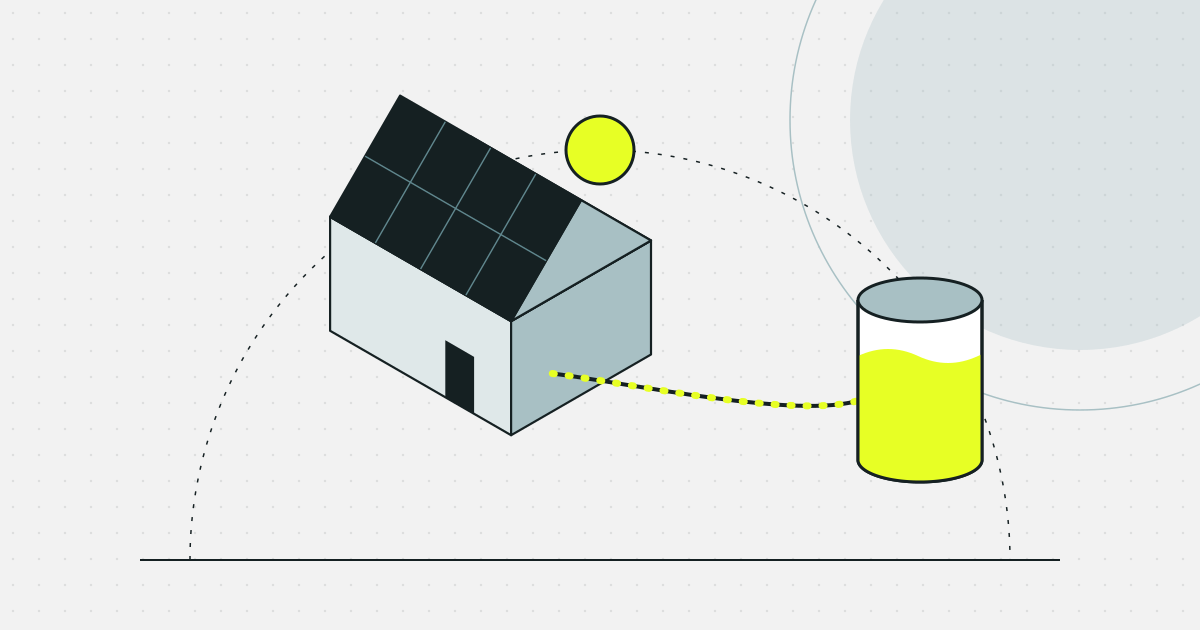
Energy storage is becoming standard in new PV installations because the way surplus energy is settled has changed — feeding it into the grid pays less and less, while using your own energy pays more and more. A battery lets you store energy produced during the day and use it in the evening, instead of selling it cheap and buying it back expensive. This economic shift means that increasingly an installation without storage is an incomplete project.
What drives this trend?
The main driver is the change in the economics of self-consumption — using your own energy on site. In a model where you get much less for energy fed into the grid than you pay for energy from it, every kilowatt-hour consumed yourself is worth more than one sold. Energy storage serves exactly this: it shifts energy from hours of overproduction (midday) to hours of highest consumption (evening), raising the share of energy used on site.
The second factor is the growing demand for independence and stability. More and more customers — both residential and business — want to protect themselves against price swings and power outages. Storage with a backup power function provides that layer of security which the PV installation alone does not.
Why is the battery ceasing to be an add-on?
Not long ago energy storage was treated as a premium option — something added to the installation if the budget allowed. Today the logic is reversing: since self-consumption is the key to profitability, and storage increases it, designing an installation without a battery means consciously giving up part of the potential benefits. For many customers the question is no longer whether to have storage, but which storage.
This shift is also visible on the technology side. Manufacturers increasingly offer storage-ready hybrid inverters as the default choice, not a special variant. Inverter-battery ecosystems are designed as a coherent whole, which simplifies installation and servicing. The market is adapting to a world in which storage is the norm.
What does this mean for the installer?
For the installer it means the conversation with the customer should increasingly start from the assumption that storage is part of the project — not from the question of whether to add it. Even if the customer does not buy the battery straight away, it is worth designing the installation as storage-ready, with a hybrid inverter that has adequate power headroom, so that adding a battery in the future does not require replacing key components.
It is also a competence shift. Storage selection — capacity, power, voltage, inverter compatibility — is becoming a skill as basic as module selection. An installer who can advise in this area has a real advantage over competitors who still treat the battery as an add-on.
What does this mean for the trading company?
For distribution the trend is a clear signal: energy storage and hybrid inverters should be at the centre of the offer, not on its margins. Demand is growing for complete, matched sets — module, inverter and battery that work together without compatibility issues.
In the Photonica portfolio, energy storage and hybrid inverters from leading manufacturers such as Deye, SolaX, Sungrow, SolarEdge, Huawei and Felicity make it possible to assemble a coherent set for a new installation designed with a battery. We also explore storage selection and economics in more depth during our webinars for PV market professionals.